• Write for Us
  • Contact Us
January 14, 2026
Pragyata Pragyata
  • ESSAY
  • COMMENTARY
  • PERSPECTIVE
  • EXCERPT
  • TRAVELOGUE
  • BOOK REVIEW
  • VIDEO
  • POETRY
  • CONVERSATION

Latest Posts

Citta-Vṛtti-Nirodhaḥ: The Discipline of Stillness in Pātañjala Yoga
January 12, 2026January 12, 2026COMMENTARYPavan Kumar Garikapati0 0

Citta-Vṛtti-Nirodhaḥ: The Discipline of Stillness in Pātañjala Yoga

The author explains that Yoga is not a technique of suppression but a disciplined process of stilling the mind’s fluctuations - Citta-Vṛtti-Nirodhaḥ. Drawing on Vyāsa’s Bhāṣya, nirodhaḥ is presented as a progressive settling of mental modifications back into their unmanifest source. As the vṛttis dissolve, puruṣa is no longer obscured by reflection in citta and abides in its own svarūpa. Yoga thus culminates not in transformation, but in the revelation of the seer’s ever-present clarity.

Read More
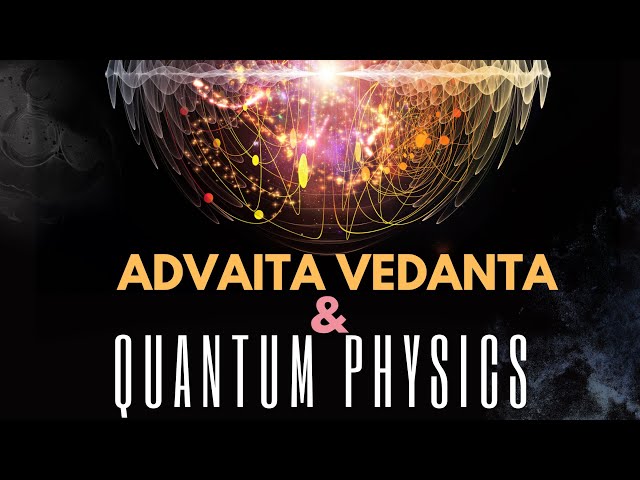
Explorations of Quantum Physics and Its Weave into Advaita Vedanta Tenets
January 09, 2026January 9, 2026PHILOSOPHYPriyvrat Gadhvi4 0

Explorations of Quantum Physics and Its Weave into Advaita Vedanta Tenets

In this article, the author Priyavrat Gadhvi argues that what we perceive as solid matter is not fundamental reality, but an effect generated by deeper, unseen quantum fields. At the most basic level, humans, objects, and even space itself are excitations within an all-pervasive field rather than independent substances. This understanding blurs the boundaries between physics, metaphysics, and philosophy, revealing reality as relational and emergent. Gadhvi contends that modern quantum field theory echoes Advaita Vedanta’s insight - that multiplicity is apparent, while the underlying essence of existence is singular and indivisible.
Read More
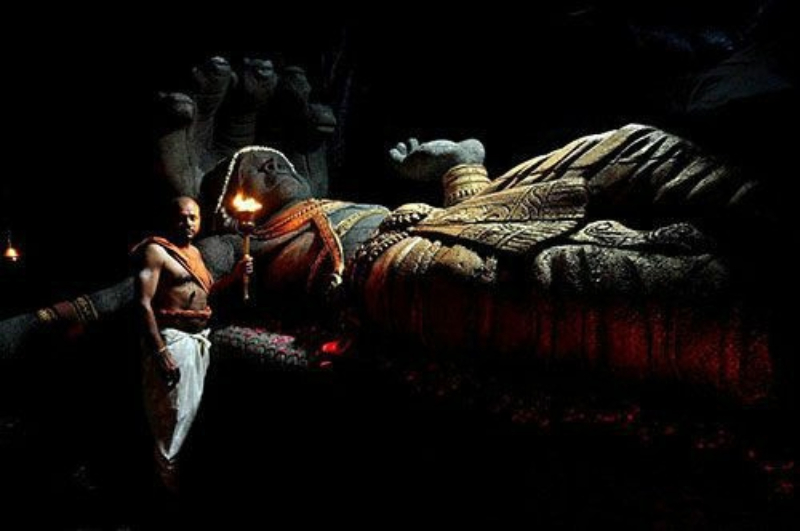
Kadusarkara Yogam – The Ancient Technique of Vigraha Making  
December 26, 2025December 26, 2025TRADITIONRema Raghavan2 0

Kadusarkara Yogam – The Ancient Technique of Vigraha Making  

This article by Rema Raghavan explains the ancient tradition of vigraha-making as prescribed in the Shilpa Shastra, where every step, from skeleton to skin, is crafted with precision, sacred materials, and ritual discipline. The author describes how Kadusarkara Yogam, a uniquely Kerala method, builds the deity stage by stage inside the Garbhagriha itself. Drawing parallels with the human body, the process develops skeletal, muscular, and nāḍi systems before the final form emerges. This painstaking art, the author notes, demands exceptional shilpis and over a hundred pure ingredients, resulting in living embodiments of divinity rather than mere idols.
Read More
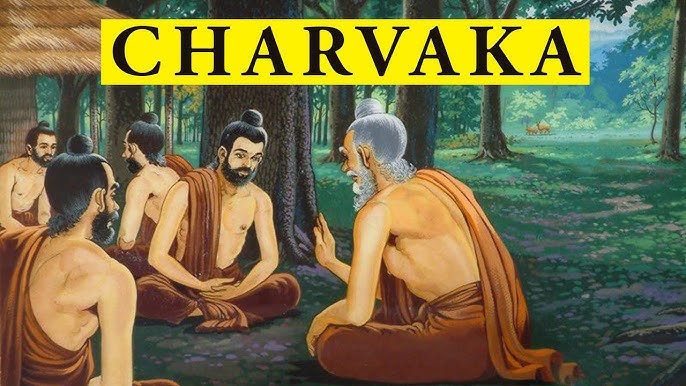
Tyranny of Asceticism: Case of the Charvaka
December 06, 2025December 6, 2025PERSPECTIVEArjun V Harihar2 0

Tyranny of Asceticism: Case of the Charvaka

Charvaka has long been dismissed as a philosophy of excess, yet this caricature stems from an ascetic worldview that treats pleasure as inherently suspect. When perception alone is accepted as truth, morality need not depend on divine command but on an intrinsic human compass. The author contends that the Charvaka tradition reminds us that seeking material pleasure is not a fall from grace, but a legitimate way of living without forfeiting moral sense.
Read More
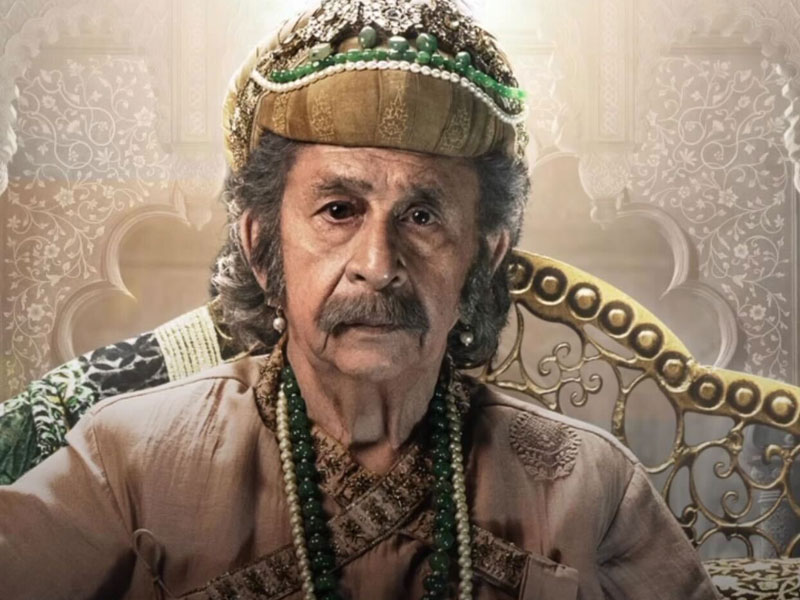
Naseeruddin Shah’s ‘Shahi’ Film Censorship Code
December 05, 2025December 5, 2025COMMENTARYSriram Chellapilla2 0

Naseeruddin Shah’s ‘Shahi’ Film Censorship Code

Naseeruddin Shah’s public interventions reveal a pattern - a demand for self-censorship that shields minorities from critique while freely vilifying the Hindu majority. His outbursts against films like Dev and A Wednesday were not about artistic principles but about enforcing an unspoken “purge agenda” that polices how minorities may be portrayed. Shah and other minority-progressive celebrities present this as secularism, yet their selective outrage exposes a deeper communal and political bias. The result is a moral narrative that gaslights Hindus while granting ideological immunity to the groups they favour.

Read More

Daily Feed

In ESSAY

The remover of obstacles

Ganesh's rise to prominence in the Hindu pantheon is an example of the dynamism inherent in Sanatan Dharma, where deities evolve and adapt to societal changes.

In ESSAY

Mainstream and marginal in ancient India

The often cited differences between mainstream Hindus and tribals is a product of the modern age.

In POETRY

Sung by God: IV (The Way of Knowing)

Sacrifice is essential to be on the path of knowing.

In ESSAY

Fiji – The forgotten land of Hindus

From the colonial period to even the present time in independent Fiji, Hindus continue to be treated as 2nd class citizens.

In POETRY

The Return of the Epic

The Epic spoke but we could not hear.

In Rebuttal, HISTORY

The Hārītīputras — Contesting distortionary narratives about the origins of the Ćāḷukyās

Anirudh Kanisetty’s book ‘Lords of the Deccan’ claims that the Ćāḷukyās were originally agriculturalists who formed into bands of brigands going about looting villages and towns, amassing wealth which emboldened them to lay claim to the terrorized territories as sovereigns, legitimised by védic sacrifices.
Lakshmi Prasad J, in his rebuttal, researches and unearths that the Ćāḷukyas of Bādāmī claim descent from Hārīti, a royal matriarch from antiquity, associated with a string of illustrious dynasties. The matronym, Hārītīputra finds mention in the royal panegyrics of at least half a dozen dynasties of Deccan.
With so much information about Calukyas being available in public domain for decades now, one expects a young researcher to be better informed and not get influenced into weaving Bollywood-esque portrayal of our ancestors.

In PERSPECTIVE

The farrago of false equivalence

Equating Hindu dharma with proselytizing religions has been the bane of Hindu society.

In ESSAY

Mithila Art: A living tradition since the Ramayana

Madhubani Art has a rich history which is steeped in stories from the Ramayana and Mahabharata which till very recently was not known to most Indians.

In ESSAY

On the existence of the Self: Part 1

Indian philosophy is never a dry intellectual exercise and has a deep purpose of not only explaining reality but also as a major tool in personal liberation or moksha.

In ESSAY

The Concept of No-Mind

Mushin No Shin is a Zen expression meaning the mind without mind and is also referred to as the state of "no-mindness".

In ESSAY

Yaksha’s Lake and the Fire Drill

The Pandavas' encounter with a Yaksha on the lake leads to a deep and profound discovery.

In ESSAY

Vena, Veda, Venus

Many scholars starting with Tilak have suggested that Vedic Vena is Venus but this identification has been disputed.

Daily Feed

In ESSAY

‘Saamkhya Hypothesis’ – Creation Link Deciphered

This article examines the 'Saamkhya' hypothesis through the lens of sciences and shows that the hypothesis is worthy of adoption as a plausible mechanism for ‘creation’ and for ‘life’.

In ESSAY

A Timeline of Ayodhya – Part 1

A chronological order through what several disciplines — archaeology, epigraphy and history in particular — have contributed to our knowledge of the ancient city of Ayodhya.

In ESSAY

Witzel’s Realm – On Reputationist Concerns Over India’s Reclamation of its History

Western Indologists such as Witzel cannot seem to accept the fact that Hindus now are reclaiming their own history.

In BOOK REVIEW

‘Saraswati’s Intelligence’ by Vamsee Juluri – A Review

Vamsee Juluri's book is a page-turner, a great example of creative reimagining done right.
It cannot easily be categorised as per conventional genres. Depending on individual inclination, it can be classified as spiritual, based on passages dealing with the questioning of the nature of Dharma; action-packed thriller, given the battle scene depictions and wars waged; or 'mythological', since despite being based on living Devatas, it is a fictional representation of them; and very different from the stories we were raised on.

In EXCERPT

Legacy of Muslim Rule In India – Politics and Integration

The Muslim legacy of expansionism still resonates in their politics and their willingness to integrate with the rest of India.

In ESSAY

Gita Govinda of Jayadeva and the Bhakti Movement

The effect of Gita Govinda has been central to the development of Vaishnavism.

In ESSAY, PERSPECTIVE

Sri Aurobindo And Mahatama Gandhi: Heroes Forgotten And Remembered (Part1)

Sri Aurobindo needs an urgent rediscovery.

In POETRY

Devi

The epitome of wisdom and knowledge, pervades all.

In ESSAY

5th August 2020 – A Day of Independence From Fear

The Ayodhya Temple marks a day of independence from the shackles that have bound Hindus for far too long.

In PERSPECTIVE

More than a renaissance

The revival of cultural consciousness among Indians looks like a Hindu renaissance but there is more to it than meets the eye.

In ESSAY

Gainsaying Ancient Indian Science – Part 2

Neo-colonialists find it hard to digest India's ingenuity in mathematics and hence, resort to gross manipulations to further their agenda.

In ESSAY

Musings on Nation and Nationalism in Sri Aurobindo’s Light

Being committed to one's own nation is a stepping stone to greater realisations of finding the true self.

jack and the beanstalk free online
king kong review
helpful resources
https://free-daily-spins.com/slots?software=microgaming&reels=3
try this website
lightning link

Trending

  • COMMENTARY
    Philosophy of Hindu Marriage

    The concept of marriage has been elaborately laid-out in Hinduism but does...

  • TRAVELOGUE
    The Ancient Barabar Caves near Gaya

    The Mauryan era Barabar Caves of the Ajivika sect are perhaps the oldest ma...

  • BOOK REVIEW
    Menstruation across cultures: A historical perspective

    Sanatana Dharma looks at menstruation through a broad lens unlike other cul...

  • ESSAY
    Akka Mahadevi’s Complete Surrender

    The poems of Karnataka’s Virasaiva saints embody the deepest devotion to Si...

  • BOOK REVIEW, COMMENTARY, HISTORY
    On Audrey Truschke’s “Aurangzeb: The Life and Legacy of India’s Most Controversial King”

    "Bridging the chasm between the historical Aurangzeb and this reimagined (a...

  • EXCERPT
    Talaq – Divorce in Islam

    Talaq (Divorce) literally means “undoing the knot”, but in Islamic law, it...

Archives

Top Searches

abrahamic Adi Shankaracharya AIT ayodhya Book review brahman caste civilisation colonial colonialism consciousness conversion Culture dharma gita guru hindu Hinduism history history distortion india Indian history islam kashmir krishna mahabharata philosophy Politics rama ramayana religion secularism shiva spiritual spirituality sri aurobindo temple temples tradition vedanta vedas vishnu war yoga Śaṅkara
Pragyata © 2020 / All Rights Reserved