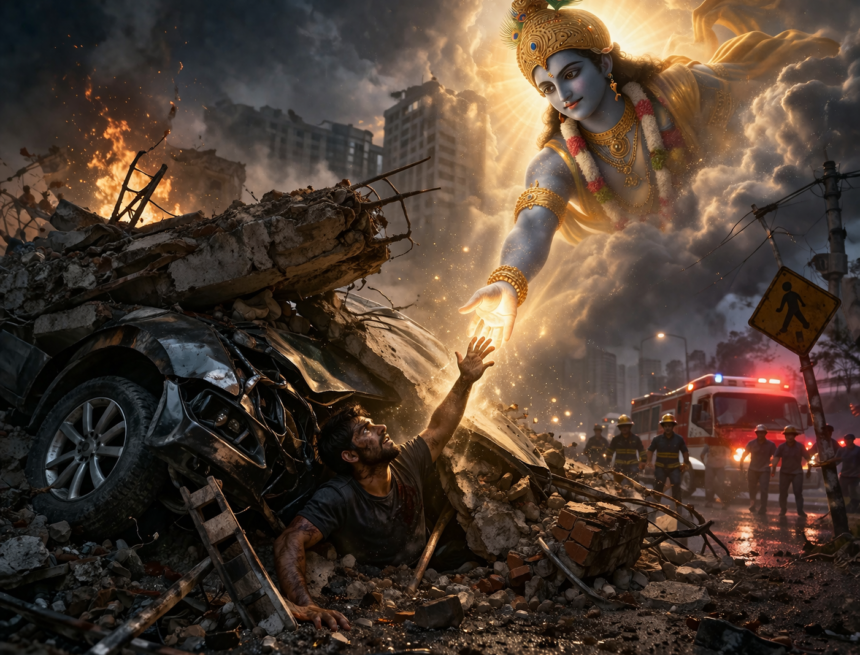
A reflective essay that begins with everyday “accidents” to probe a deeper philosophical question: what is an accident? Moving from legal definitions to Aristotle and Hume, it argues accidents arise from human ignorance of causes. Drawing on Hindu acharyas like Shankaracharya and Ramanujacharya and scriptures like the Isha Upanishad, Bhagavad Gita, and Srimad Bhagavatam, it advances a final insight: what appears accidental is ultimately governed by divine grace.

Latest Posts
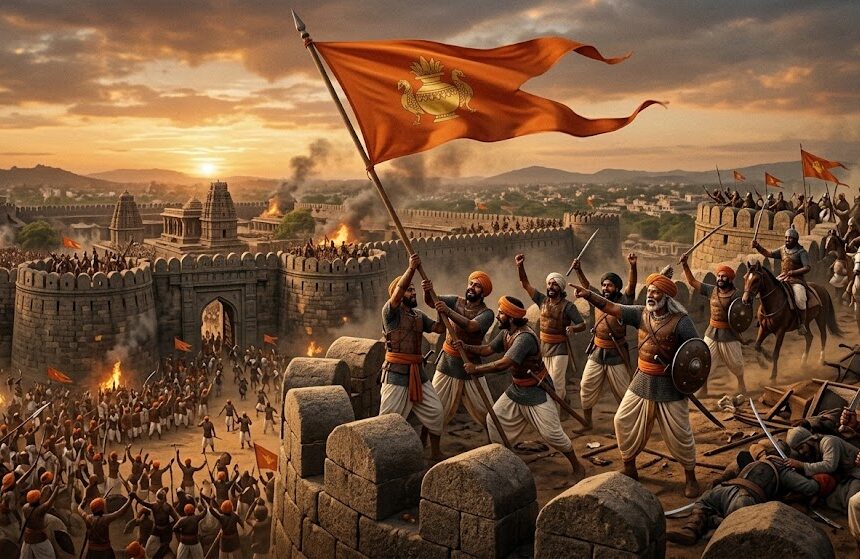
The Story of the Musunuri Nayakas – The Rise and Fall of a Telugu Resistance
After the fall of the Kakatiyas, Telugu land was plunged into devastation under the Delhi Sultanate, with temples desecrated and society disrupted. From this chaos emerged the Musunuri Nayakas, who united scattered warriors and waged a fierce resistance to reclaim their homeland. Led by Prolayanayaka and later Kapayanayaka, they drove out invaders and restored cultural life, inspiring wider southern revolts and the rise of Vijayanagara. Yet internal rivalries and betrayal weakened this hard-won unity, leading to a tragic fall. Their legacy endures as a powerful chapter of resilience, resistance, and civilizational revival.
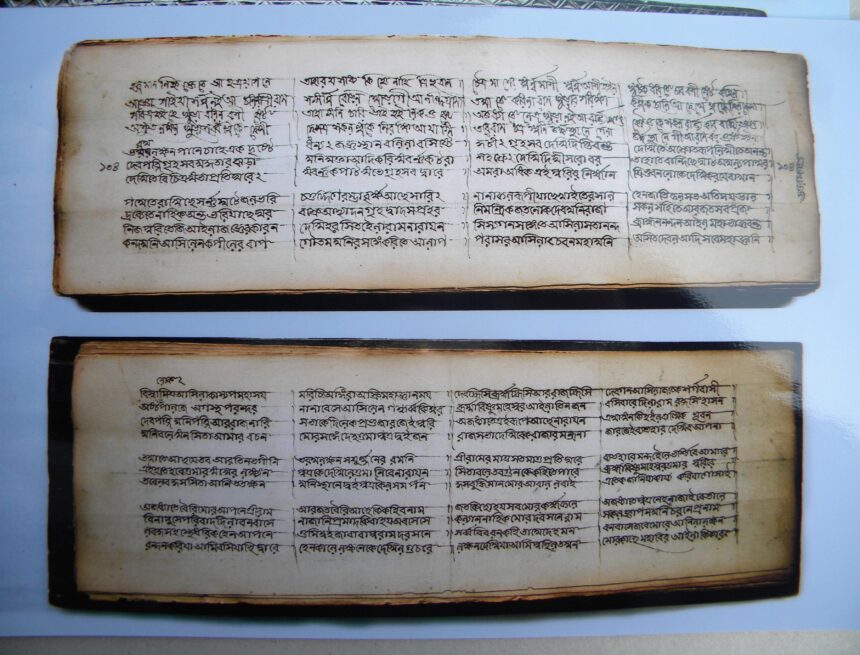
The two streams of the Bengali language: Claims, Counterclaims and Facts
Published in the ISPAD Partition Center Journal (Oct 2025), this paper challenges claims that vernacular languages in India emerged only under Islamic rule due to a supposed Sanskritic monopoly. It shows that regional literary traditions flourished under Hindu patronage well before this period. The paper also disputes the idea that modern Bengali was artificially Sanskritized by colonial institutions, demonstrating that both Hindu and Muslim writers historically used a shared Sanskrit-based linguistic framework. It further highlights that later attempts to Islamize Bengali had limited success.
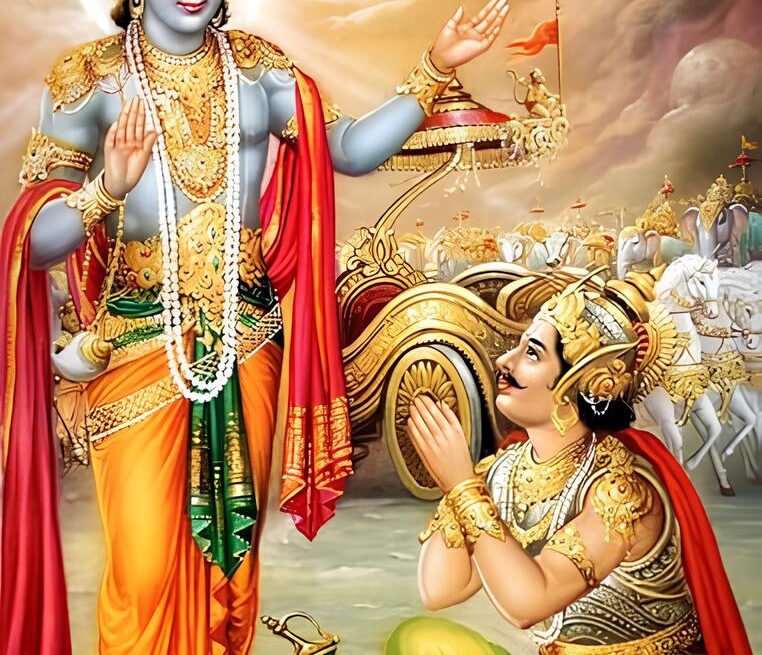
The Mahabharata as an Indic Civilizational Framework: Dharma, Power, and Human Consciousness
The Mahabharata is not merely an epic or religious text but a civilizational framework through which Indian society has long understood power, morality, and human conflict. Rather than offering rigid moral binaries, it presents dharma as contextual and relational, shaped by responsibility and awareness. Through complex characters and difficult choices, the epic explores the burdens of power, the psychology of action, and the consequences of ethical failure. In doing so, it functions as a living guide to navigating moral ambiguity within society.
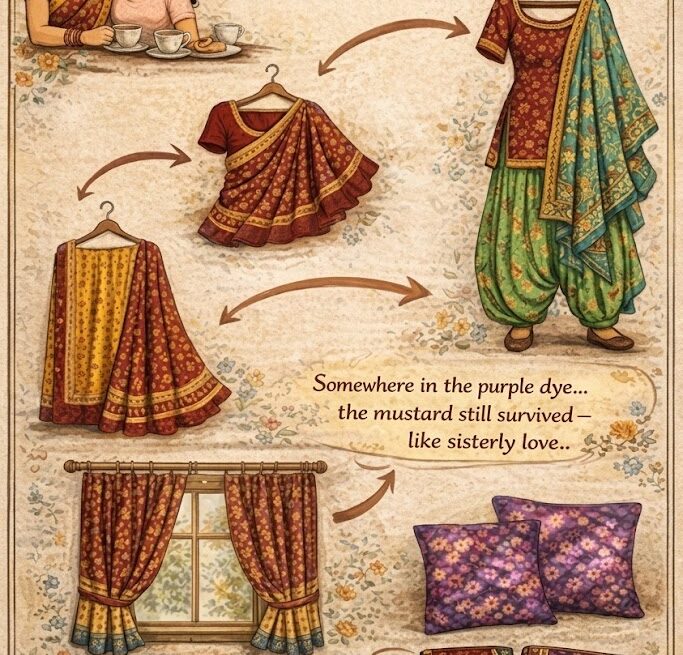
Nuwari of a Story!
A single mustard-and-maroon saree becomes the thread weaving together generations of memory. As a mother recounts its journey - from saree to half-saree, curtain, cushion cover, and album cover—her daughter discovers how fabric can carry family history. Each transformation holds laughter, sisterly love, and the ingenuity of making do with what one has. In the end, the saree becomes more than clothing - it becomes a living archive of relationships, creativity, and continuity.
Daily Feed
RSS in western media
The portrayal of RSS and "Hindu Nationalism" in Western media has changed a little over the last couple of decades but the credit for the same does not go to the RSS itself, which remains indifferent to such challenges as before.
Resolving The Conundrum Of Visvesvara Jyotirlinga And Wuzukhana Shivalinga
The author explains why the Wuzukhana Shivalinga cannot be the original Visvesvara Jyotirlinga, Nandisavara, Tarakesvara, or Gangesvara, and asserts the possibility of it being the original Avimuktesvara Linga.
Sarva Dharma Samabhava
The slogan of all religions being equal is a gross misrepresentation as their inherent aspirations differ greatly.
The one who stands apart
Bhairava, the terrifying form of Shiva, inspires fear as he strikes at the root of all fear, the ego.
The Limits of Equality: A Dharmic Appraisal of Modern Political Theology
Modernity universalizes Enlightenment ideals of equality, recasting Dharmic order as moral failure. But in Dharma, justice lies not in sameness, but in harmony—each being acting in accordance with its Svabhāva and Svadharma. The caste system, far from being a hierarchy of worth, was a framework of reciprocal duty, now misunderstood and maligned through colonial and liberal lenses. True reform lies not in dismantling tradition, but in reclaiming its wisdom with renewed understanding.
Circle of Yoginis
A Yogini is one who is possessed of magical powers and takes on different divine energies to maintain harmony in the Universe.
8 reasons why Hinduism rocks in the new age
The openness and plurality of Hinduism make it an ideal religion for all times and especially in this age of reason and cosmopolitan societies.
Immigrants were once welcomed in Assam – Part 1
Sentiments involving immigrants from Bengal into Assam have ebbed and flowed as time has gone by.
Countering narratives against Hinduism during Kartika Masam in Odisha
In this auspicious lunar month we try to inculcate some noble qualities to march in the path of Bhakti and shed negative attributes of our body-mind.
“Quit or die!” – Gandhi warns Hindus
'Direct Action Day' was a call for a show of strength by the Muslim League. The secularist narrative, instead of condemning the perpetrators of violence, blames Hindu intellectuals and spiritual leaders, who were either far away from the scene or dead when the 'Great Calcutta Killings' took place.
Democracy in Ancient India
Ancient India was the progenitor of democracy, as one can trace its evolution from the Vedas and subsequently hear of its presence through numerous accounts.
Aryan-Dravidian Culture & Critique of Sheldon Pollock
In this enlightening interview, Dr. R. Nagaswamy & Rajiv Malhotra discuss the roots of Aryan-Dravidian culture as well as the misinformation spread by Sheldon Pollock.
Daily Feed
Immigration from Bangladesh
Simmering communal tension in some of the border areas is one of the manifestations of the effects of large-scale illegal migration of Bangladeshi nationals who have slowly displaced or dispossessed the local population.
How to desecrate a mother
The Ganga has a long history of being abused by the Indian state to make way for 'development'.
André Malraux on India and Bangladesh – Part 2
In the second installment of André Malraux's views on India and Bangladesh, Dileep Karanth translates an open letter written by André Malraux to the president of the USA, Richard Nixon. In the letter André Malraux questions the stand taken by the newly emerged superpower that the USA was, towards India, Pakistan, and Bangladesh.
Kashmir: An Overview of the Seven Exoduses of Hindus (Part 3)
The final exodus of Kashmiri Hindus from their homeland was complete, centuries after Islam put the holy land in its crosshairs.
Thoughts on the date of the Mahabharata War
Astronomical references from the text suggest that the Mahabharata war took place not earlier than 3200 BCE nor later than 1800 BCE.
Vijayanagara: City Of Victory
The pleasant sound of Tungabhadra
flowing behind the temple with musical pillars
where gods are worshipped no more...
Śaṅkara Charitam – A Re-telling – Chapter – 01
Shri Ramesh Venkatraman delves into detail about the life and the times of Jagadguru Shri Adi Śaṅkaracharya, and his impact on Sanātana Dharma, on the basis of his study of two authoritative texts on Śaṅkara: The Mādhaviya-Śaṅkara-Digvijayam of Jagadaguru Śri Vidyaranya Mahaswami, 12th ācārya of Dakshinamnaya Sringeri Sharada Peetam; and Śaṅkara Charitam, a collection of talks given by the Paramācārya of Kānchi, Jagadaguru Śri Chandrashekarendra Saraswati, the 68th Jagadguru of the Kānchi Kāmakoti Peetha.
In the first chapter of the series of essays that will be published every Thursday (Guruvāsaram), we learn about the circumstances that necessitated the emergence of an avatāra-puruṣa in Kaliyugā.
The textbook vision of Indian History
The vision of history propagated by the school and college textbooks in India is a caricature of the real past, explicitly serving the political goals of Marxism.
Śaṅkara Charitam – a re-telling – Chapter-12 – Śivaḥ kevalo’ham
Chapter 12 of Śaṅkara Charitam takes us through Śaṅkara’s meeting with his Guru, and the Guru's acceptance of Śaṅkara as his disciple.
Govinda Bhagavatpāda asks the boy standing at the foot of the cave, inside which he meditated for centuries, to introduce himself and Śaṅkara calls himself - "Śivaḥ kevalo’ham".
The life of Gauḍapāda as a Brahmarākṣasa and his meeting with Govinda Bhagavatpāda is also mentioned in this chapter.
The Eternal Dasas of Sree Padmanabha Swamy – III(Medieval Times)
Various kings during the medieval period served their Swamy by offering resistance against invading forces.
The Muslim birth rate
There is no indication that even one Muslim country will achieve a substantially lower growth rate than India's Hindu community within the next decades.
Hayagriva – The Horse faced God who carries our Civilization
Lord Hayagriva represents the restorer archetype who restores wisdom from the clutches of ignorance.
